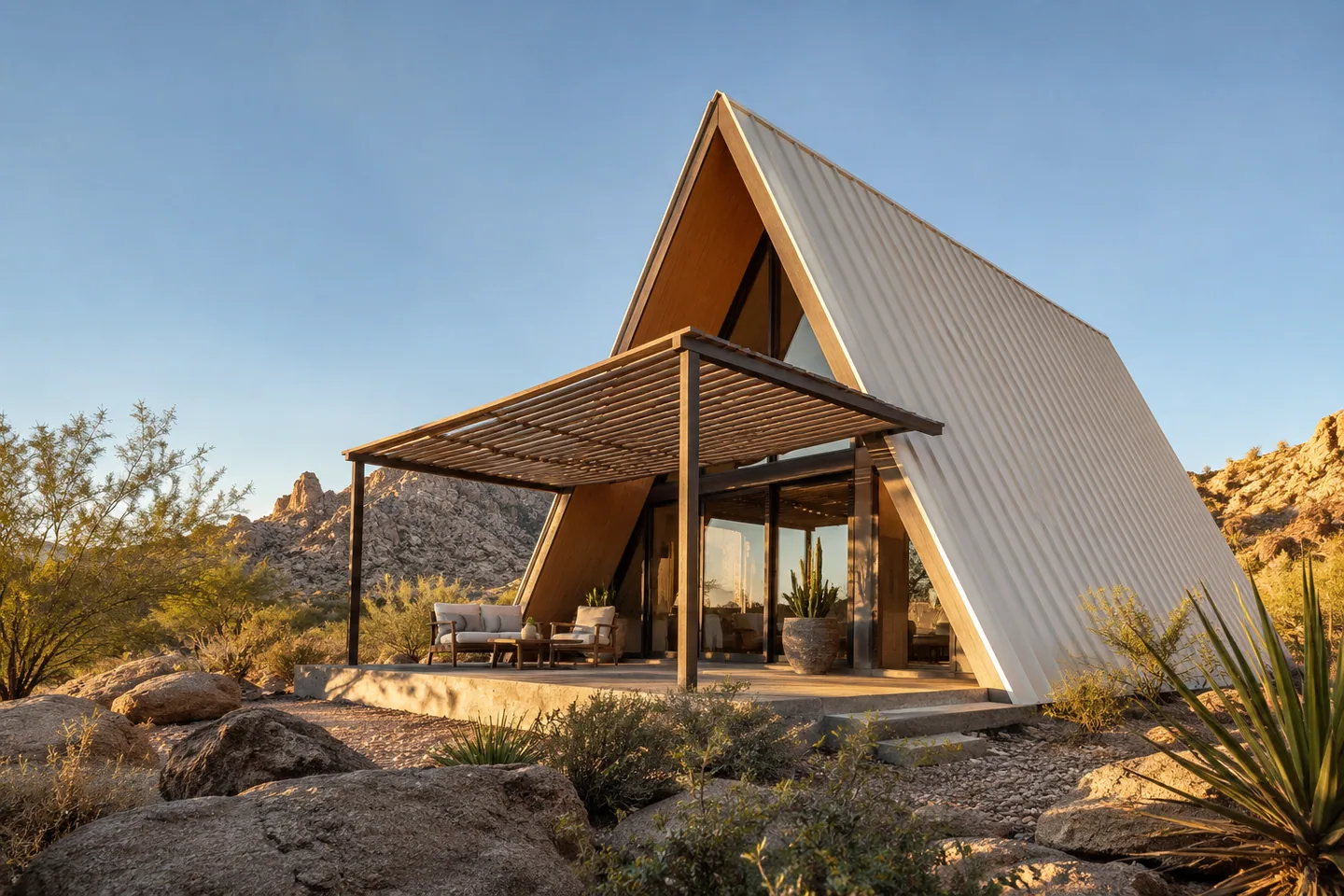
AI-generated cabin concept, used for illustration.
In this guide
A hot, dry location needs more than a general “summer cabin” design. Examine the actual daily and seasonal conditions before choosing glazing, shading and the heating or cooling arrangement.
Use local conditions rather than a climate label alone
Ask the designer to review the temperature pattern, solar exposure and other relevant site conditions using appropriate local data. Two places described as dry can still differ in the conditions that matter to a cabin.
Your Home: Design for climate provides general climate-responsive design principles through Australian examples. Use locally applicable data and requirements for your project.
Test the full day of use
Follow the cabin from morning through afternoon and overnight. Identify when each occupied room needs protection from unwanted sun and how the proposed systems maintain appropriate conditions.
For an illustrative question, an open window strategy depends on whether outdoor conditions are suitable at the time you plan to use it. It should not be assumed to solve every warm night or unattended period.
Coordinate shading and window performance with the mechanical design. Keep any water-dependent equipment requirements explicit rather than overlooking them in a place where supply planning already matters.
The result should explain how the cabin is intended to operate and what happens under less favorable conditions. A dark roof, large glass wall or exposed timber interior may be a visual preference, but each belongs within the complete local design rather than standing in for one.