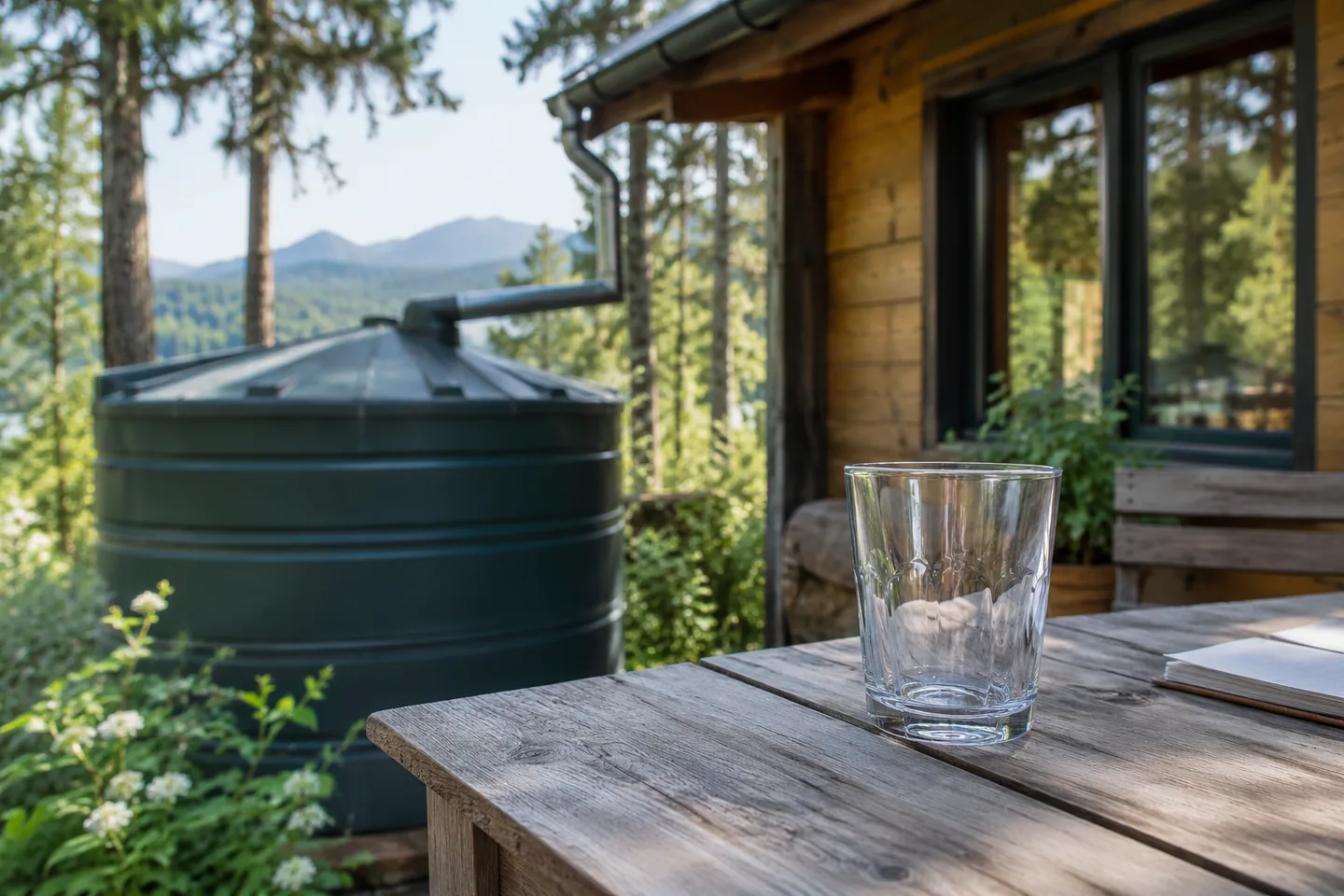
AI-generated cabin concept, used for illustration.
In this guide
Collected rainwater is not automatically safe to drink, even when it looks clear. Decide the intended use first and seek local health guidance on testing, treatment and the collection system.
Treat water quality as a separate question
The CDC: Collecting rainwater and your health explains that collected rainwater can contain germs and chemicals. It recommends local advice and appropriate testing and treatment for the intended use, and describes lower-exposure uses as an alternative.
A roof-area or rainwater calculator estimates potential volume. It does not assess contamination or certify that a supply is suitable for drinking.
Keep the collection materials, storage and any treatment equipment documented. Do not choose a generic filter on the assumption that it removes every possible contaminant.
Keep the plumbing and routine coordinated
Have the appropriate professionals address separation from drinking-water supplies and any required controls. Check local rules for collection and use.
For an illustrative planning decision, a cabin may use collected water for a permitted non-drinking purpose while relying on another suitable source for drinking and food preparation. That distinction needs to remain clear to every user.
If drinking use is proposed, ask who will arrange testing, interpret results, maintain treatment and respond when the system is not functioning as intended. The owner needs an ongoing routine, not just an installation invoice.
The right next step is a locally appropriate water-quality plan. A successful collection calculation answers how much water might arrive, not whether it should go into your glass.