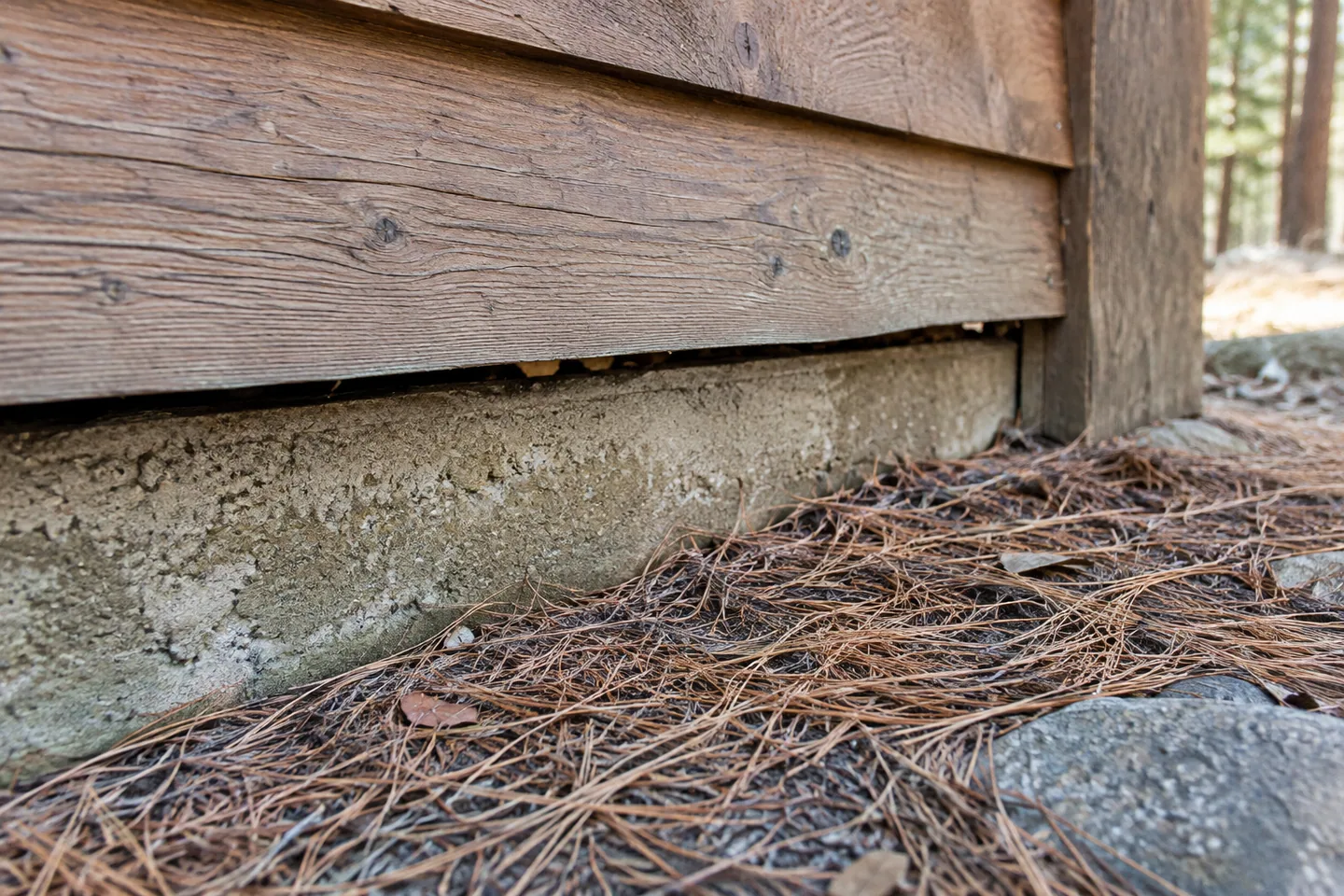
AI-generated cabin concept, used for illustration.
In this guide
If you notice signs of pests at the cabin, document the location and seek appropriate guidance on the actual problem. Do not assume the right response is to seal every visible opening.
Record without disturbing
Note where the signs appear, when they were first noticed and any associated damage. Avoid disturbing droppings, nesting material or unfamiliar contamination as part of a casual inspection; use appropriate local health and pest-control guidance for handling.
Check the food-storage and departure routine, but do not let a tidy kitchen substitute for investigating a building-entry issue.
Coordinate any repairs
Ask the relevant provider to identify likely entry points and explain the proposed treatment or repair. Building openings may serve ventilation, drainage or equipment functions, so have unfamiliar details identified before altering them.
Your Home: ventilation and airtightness provides context for intentional ventilation. Closing a designed airflow route is not a sound general pest strategy.
For an illustrative coordination issue, a repair may require both pest-control advice and a building contractor to restore a damaged detail. Clarify who handles each part and how the result will be reviewed.
Keep the findings, completed work and follow-up instructions in the cabin file. Check the same locations during later visits. The goal is an identified problem with a suitable response, rather than repeated improvised treatments that leave the entry route or damage unexplained.