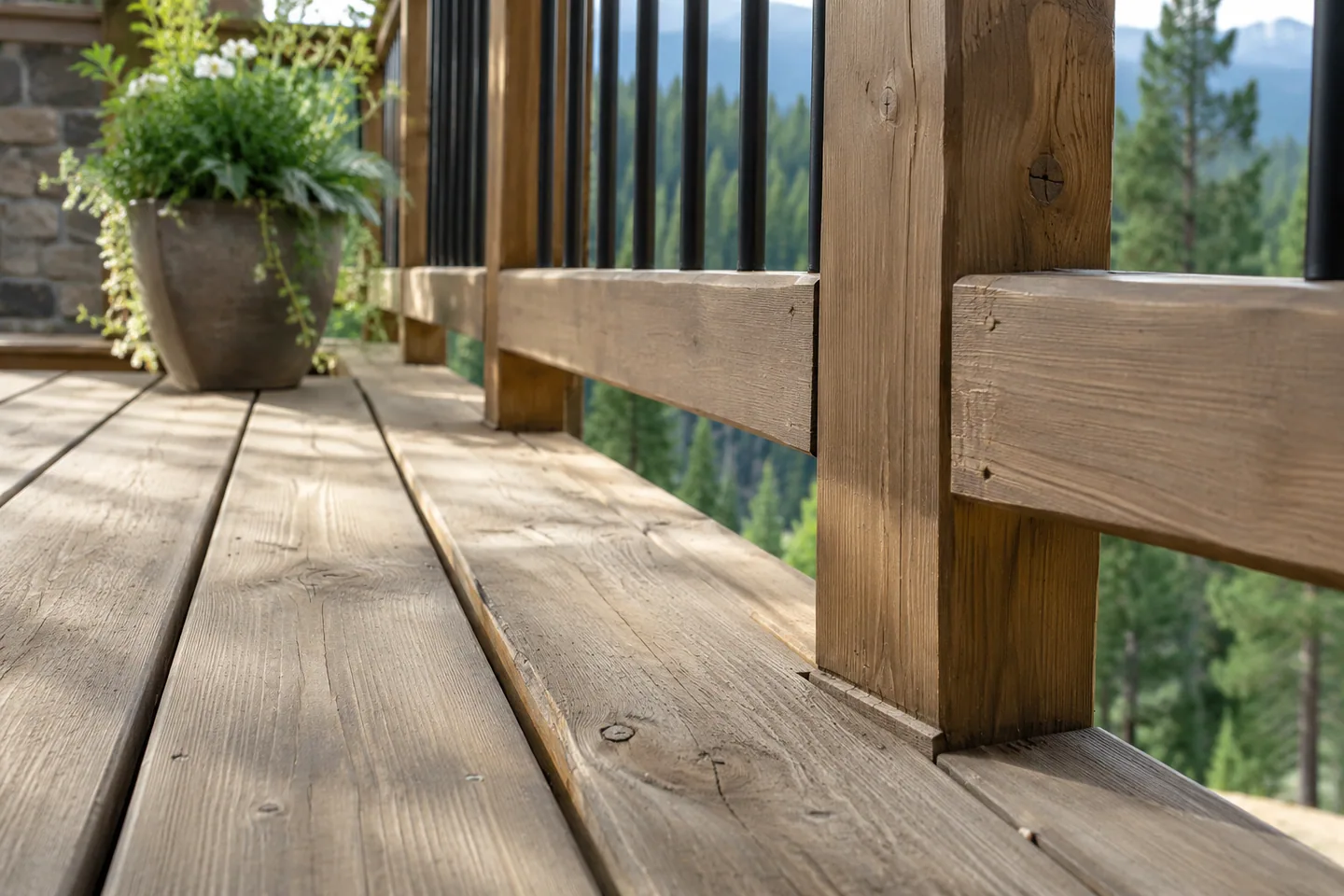
AI-generated cabin concept, used for illustration.
In this guide
A cabin deck's appearance does not establish its structural condition. Record visible concerns and seek an appropriate assessment before treating all maintenance as cleaning or refinishing.
Keep observations specific
Note movement, damaged surfaces, changes around connections and any other visible concerns from a safe position. Photograph the location and date. Do not load-test a suspect deck or dismantle connections to investigate.
If the deck or guarding appears unstable, keep people away and obtain appropriate professional help. A remote article cannot determine whether it is safe to use.
Separate the proposed scopes
Ask a qualified provider to explain which work addresses condition, which requires design or further investigation and which is purely cosmetic. Keep any applicable local approval process with the structural work.
The FTC: avoiding home improvement scams supports obtaining written scopes and checking providers in the US. Confirm qualifications relevant to the actual task.
For an illustrative budgeting issue, a quote to wash and refinish boards may exclude the support structure entirely. That can be a legitimate limited scope, but it should not be mistaken for a complete deck assessment.
Save the findings, repair details and future inspection advice in the cabin maintenance file. Review changes promptly rather than relying on the deck's age alone. The useful decision is based on the actual assembly and condition, including the parts that are less visible from the outdoor chair.