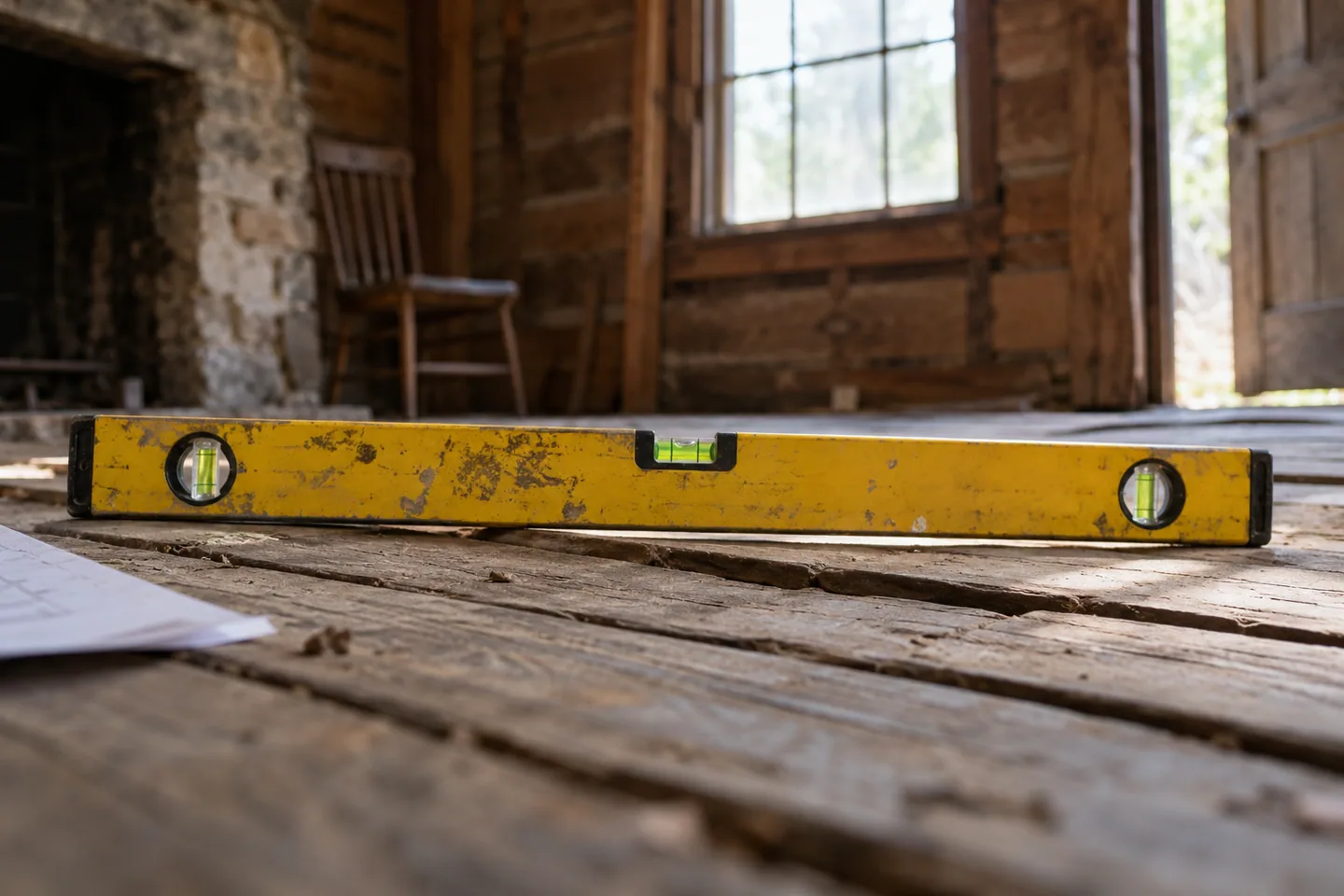
AI-generated cabin concept, used for illustration.
In this guide
An uneven cabin floor needs an explanation before you cover it with a new finish. The visible surface may be only one part of the issue, and this article cannot diagnose the structure remotely.
Record the pattern without disturbing it
Mark the affected locations on a simple plan. Note doors that behave differently, visible gaps and any change reported over time. Keep dated photographs from repeatable positions.
Separate documented history from impressions. “The door began sticking this spring” is more useful than an unsupported claim that the cabin is still settling normally.
If there is sudden movement, obvious instability or another immediate concern, keep clear and seek appropriate professional help.
Ask for the right scope of assessment
Give the assessor available foundation drawings, site information and repair records. Ask what needs inspection and whether a structural or ground specialist is required.
Your Home: designing a house provides broad context for coordinated building decisions; the actual diagnosis needs qualified examination of the cabin and site.
An illustrative mistake is budgeting for leveling compound before anyone determines why the floor is uneven. A cosmetic treatment may not address the relevant cause and could complicate later investigation.
Keep the assessment, proposed work and any monitoring instructions together. If the cabin is part of a purchase, discuss the unresolved findings with the professionals advising on the transaction. The useful next step is evidence about this building, not reassurance based on another old cabin's sloping floor.