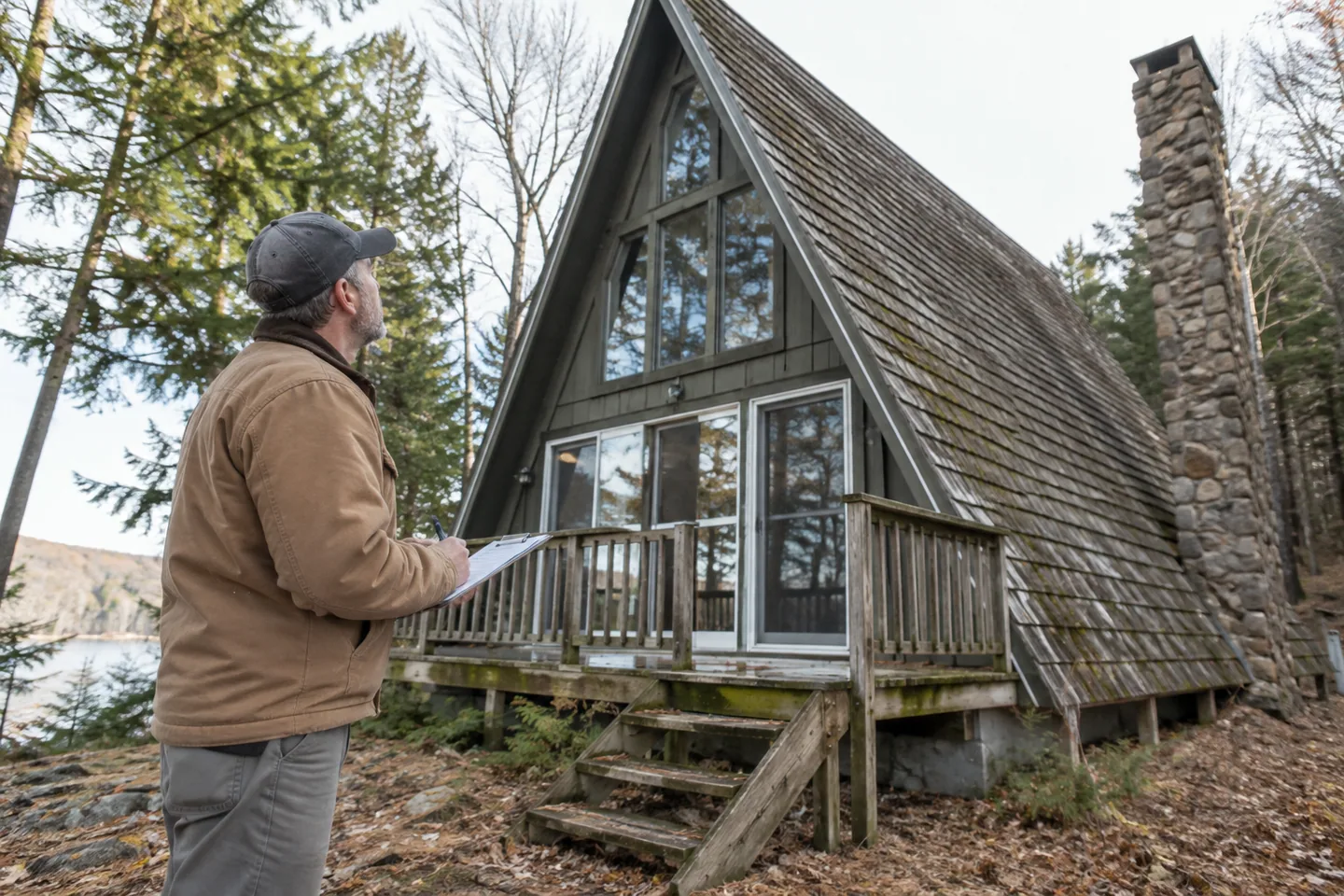
AI-generated cabin concept, used for illustration.
In this guide
Before buying an existing A-frame, arrange an appropriate inspection and understand what it covers. A general inspection and a specialist assessment do not necessarily answer the same questions.
Gather the history first
Request available plans, permits, service records and documentation of alterations. Note the roof, windows, heating, water and wastewater equipment. Separate documented facts from the seller's recollection.
Give the inspector your concerns and ask about access limitations. High roof surfaces, enclosed assemblies and inaccessible underfloor spaces may need further investigation rather than a confident conclusion from a brief visit.
The FTC: avoiding home improvement scams provides US guidance for checking service providers and written scopes. Confirm the inspector's appropriate qualifications and local requirements for the work involved.
Turn findings into decisions
Ask the report to distinguish observed conditions, recommended follow-up and items outside the inspection scope. If a specialist assessment is recommended, obtain it before treating the unresolved issue as a minor repair.
For an illustrative example, an interior stain may require investigation before you can price its cause. Budgeting only for repainting assumes the answer prematurely.
Create a decision list with each issue, the next professional input and its effect on your purchase assessment. Discuss contractual and timing matters with the professionals handling the transaction.
A useful inspection does not promise that an older cabin has no future problems. It gives you a clearer picture of condition, uncertainty and the work you are taking on before the view persuades you to overlook the rest.