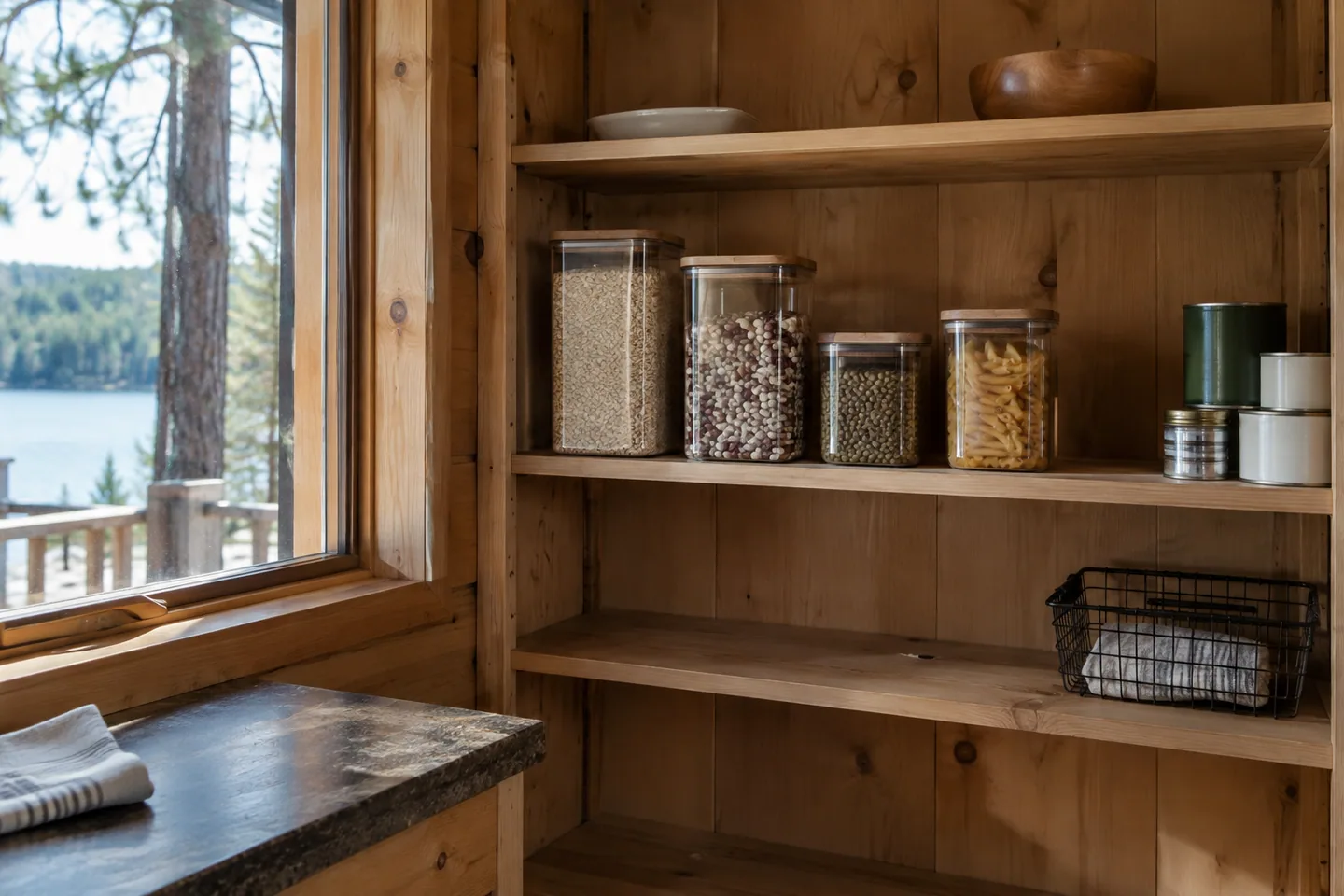
AI-generated cabin concept, used for illustration.
In this guide
Keep a clear inventory of food left at the cabin and follow each product's storage instructions. Long gaps between visits make “we probably still have some” an unreliable shopping plan.
Separate what stays from what leaves
Decide which items are suitable to remain under the cabin's actual storage conditions. Consider whether power, temperature and access remain dependable while the building is empty. Do not assume an unattended refrigerator will always operate normally.
Label stored supplies clearly and check dates during each visit. Keep food separate from cleaning products and use suitable containers. Follow local wildlife guidance where food storage has additional requirements.
Make departure the inventory moment
Record what is left, what was used up and what must be removed. A brief photograph can help, but it should not replace checking conditions or following product guidance.
An illustrative routine uses one small list with item, quantity and date checked. Keep the list where the person planning the next trip can actually see it.
If there are signs of pests or damaged packaging, seek appropriate guidance rather than simply transferring the contents into a new container. Address the storage and building issue as needed.
Avoid building a large reserve that nobody reviews. A modest, current supply is easier to manage than several seasons of forgotten purchases. The system succeeds when the next visit starts with an accurate picture of what is available and appropriate to use.