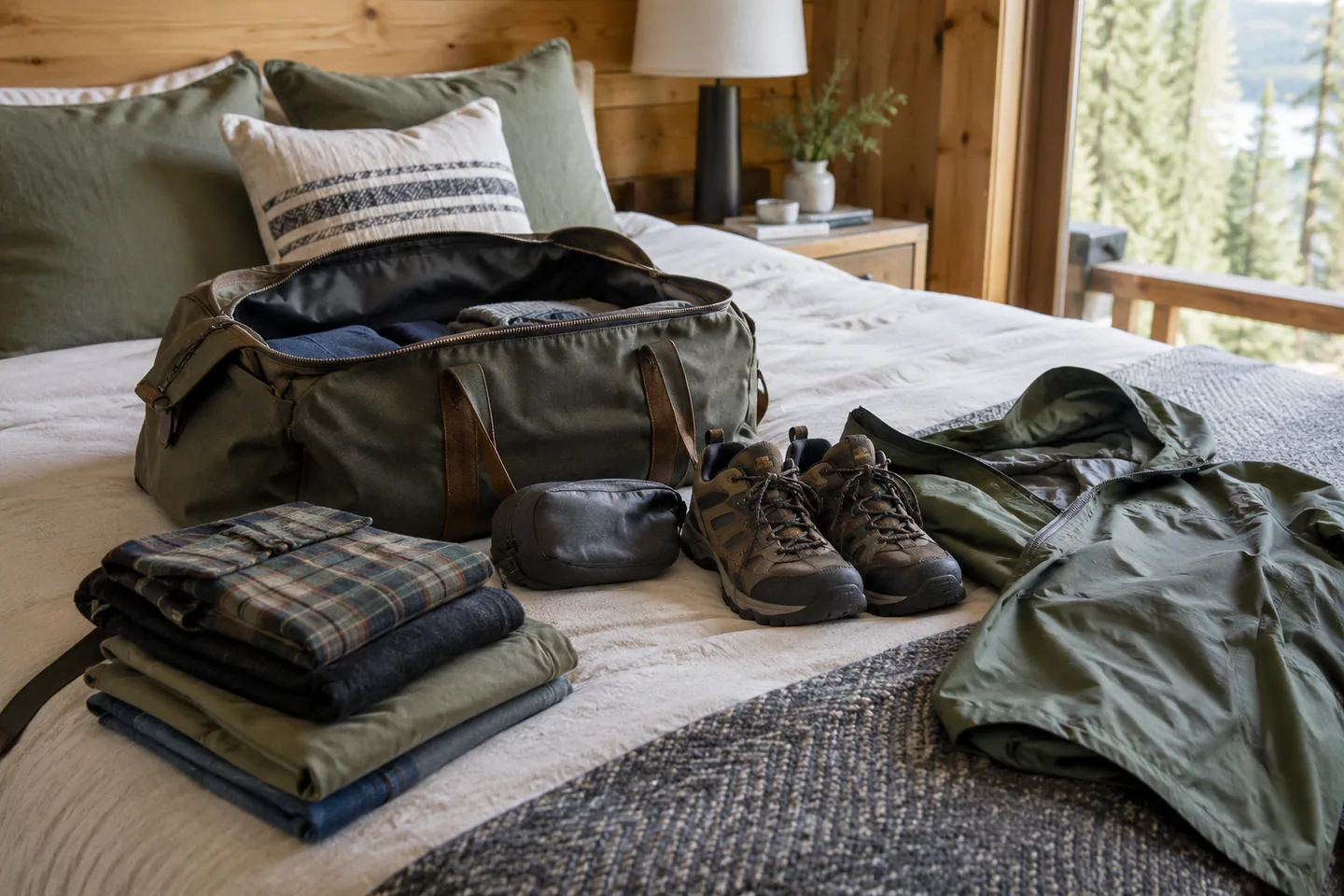
AI-generated cabin concept, used for illustration.
In this guide
Pack for the cabin's actual setup, not an imagined fully equipped house. Confirm what is already there, what works during your visit and what you are expected to bring.
Use three practical groups
| Group | Examples to confirm |
|---|---|
| Personal | Clothing for the forecast, toiletries, required personal items |
| Cabin-specific | Bedding sizes, towels, drinking-water arrangement, cooking supplies |
| Trip-specific | Route information, charged communication devices, planned outdoor equipment |
This is a planning framework, not a complete emergency kit or advice for a particular outdoor activity. Adjust it to your destination and circumstances.
Ask about access and services before departure. A cabin without reliable communications or nearby shopping needs a different preparation routine from one beside a town. Check current weather through the relevant official service; National Weather Service: winter safety is a US resource for winter-weather preparation.
Pack from a standing inventory
Keep a short list of supplies left at the cabin and update it when something is used up. Record actual quantities where they matter instead of writing “probably enough.”
For an illustrative improvement, photograph the clean-linen shelf at the end of a stay and update the inventory. That can prevent bringing duplicate sets while forgetting the size that is missing.
After each visit, note one unnecessary item and one thing you lacked. Over time, the list becomes smaller and more accurate. A useful packing list reduces uncertainty before you leave rather than producing the largest possible bag.