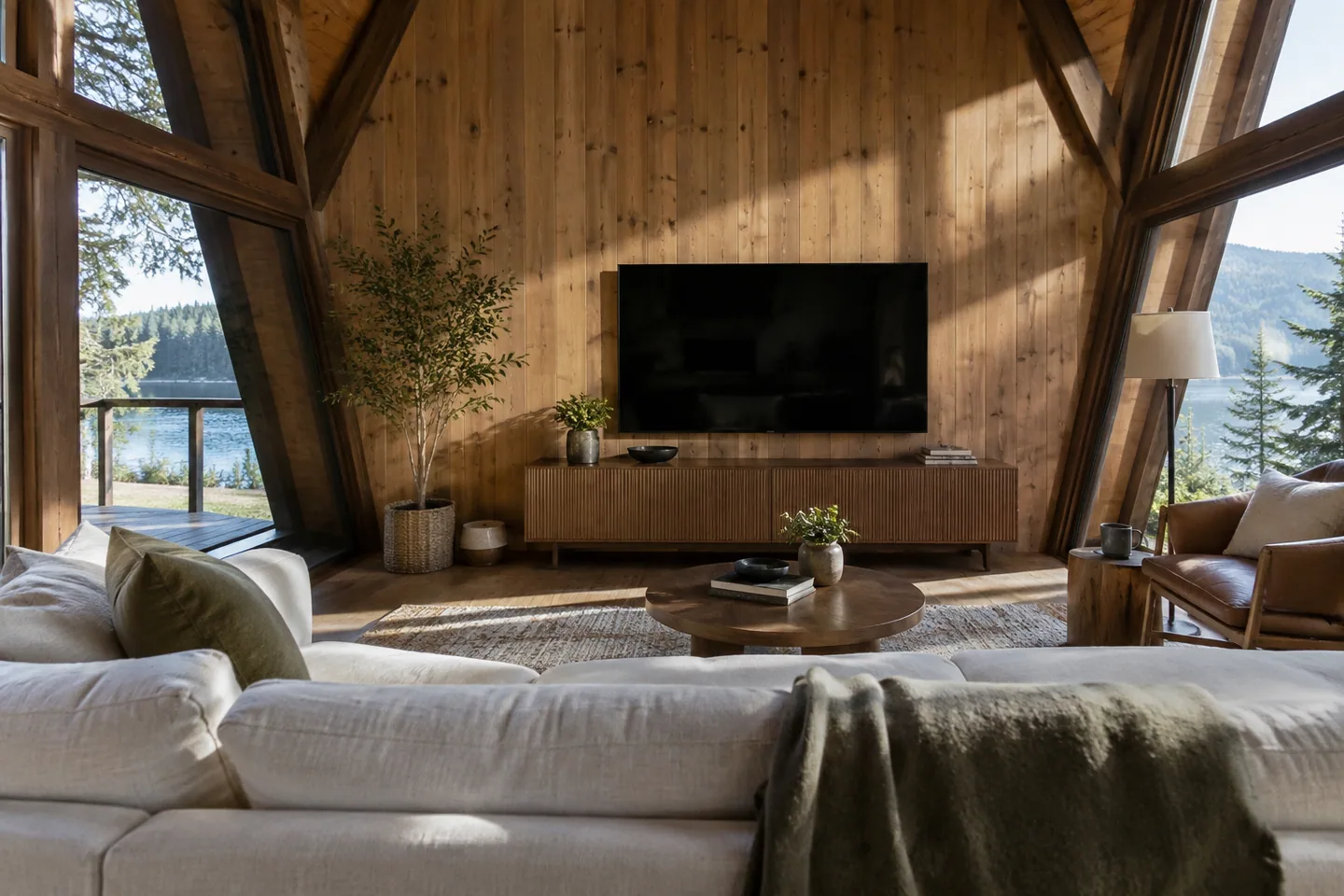
AI-generated cabin concept, used for illustration.
In this guide
Choose the TV position from the seat you will actually use. A sloped wall can make mounting complicated, but the room may offer a simpler freestanding or gable-wall arrangement.
Test the screen location first
Use a cardboard outline at the proposed size and position. Sit in the normal places, check the view and note glare at the times you expect to watch. Include the route through the room and nearby window coverings.
Do not choose a high position solely because the wall below is occupied. Try moving the seating or storage before fixing the screen location.
Resolve support and cables properly
For any mount, confirm compatibility with the screen, the mounting surface and the product instructions through an appropriate installer. A sloped surface needs a mounting system designed for that use; do not adapt a standard bracket by guesswork.
If using furniture, follow the product's stability and securing instructions. Keep cables out of walking routes and coordinate permanent electrical changes appropriately.
An illustrative alternative is a modest console positioned away from the low roof edge. It may improve viewing while providing storage, but its full depth must still fit the room.
Check the arrangement with the TV off too. Decide whether the screen should dominate the view from the entrance or remain secondary to the window. The practical trial often resolves the aesthetic question more clearly than shopping for brackets first.