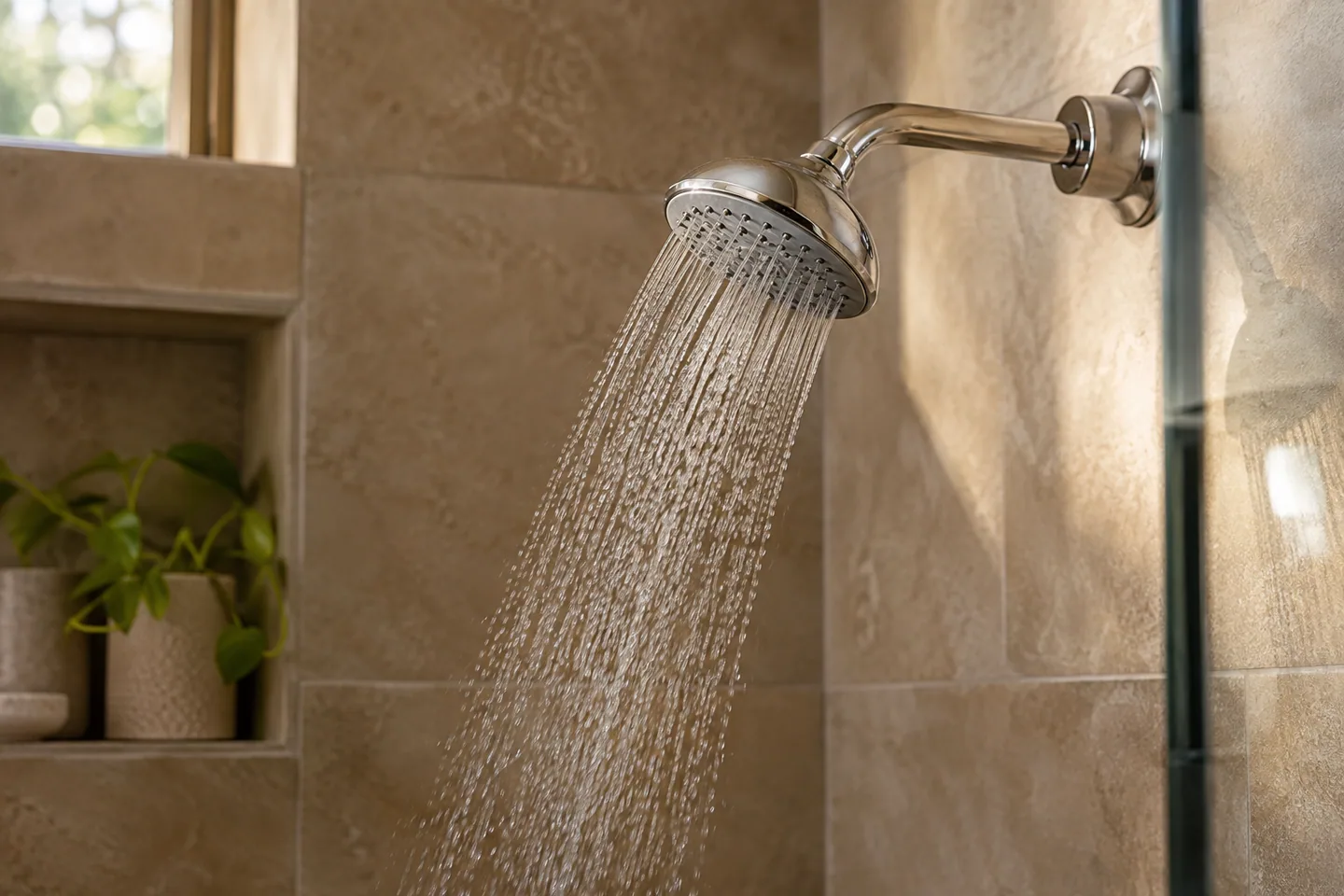
AI-generated cabin concept, used for illustration.
In this guide
A lower-flow shower should be selected with the cabin's pump and water heater in mind. Reducing the fixture's flow is useful only if the whole system continues to operate appropriately.
Collect the three specifications
Record the proposed shower fitting, the heater model and the supply arrangement. Ask the installer to compare the fixture's operating information with the heater's requirements and actual supply conditions.
For an illustrative water-use comparison, reducing an assumed flow from 8 to 6 liters per minute over a 5-minute shower changes the volume from 40 to 30 liters. Those invented inputs demonstrate arithmetic; they do not establish a suitable product or expected comfort.
Your Home: hot water systems provides general context for coordinating demand and water-heating equipment. Product-level requirements govern compatibility.
Test before replacing every fixture
If practical, have one suitable installation evaluated before making a wider change. Check operation at ordinary settings and record any temperature instability or failure to activate. Report those symptoms to the installer rather than bypassing controls.
Also consider cleaning and maintenance instructions. A fixture that performs well when new still needs appropriate care in the actual water conditions.
Keep the approved product information in the cabin file. If a guest or future owner replaces the shower fitting, that record explains why the choice mattered. A small plumbing purchase can affect more than the visible spray head, especially in a compact off-grid system.