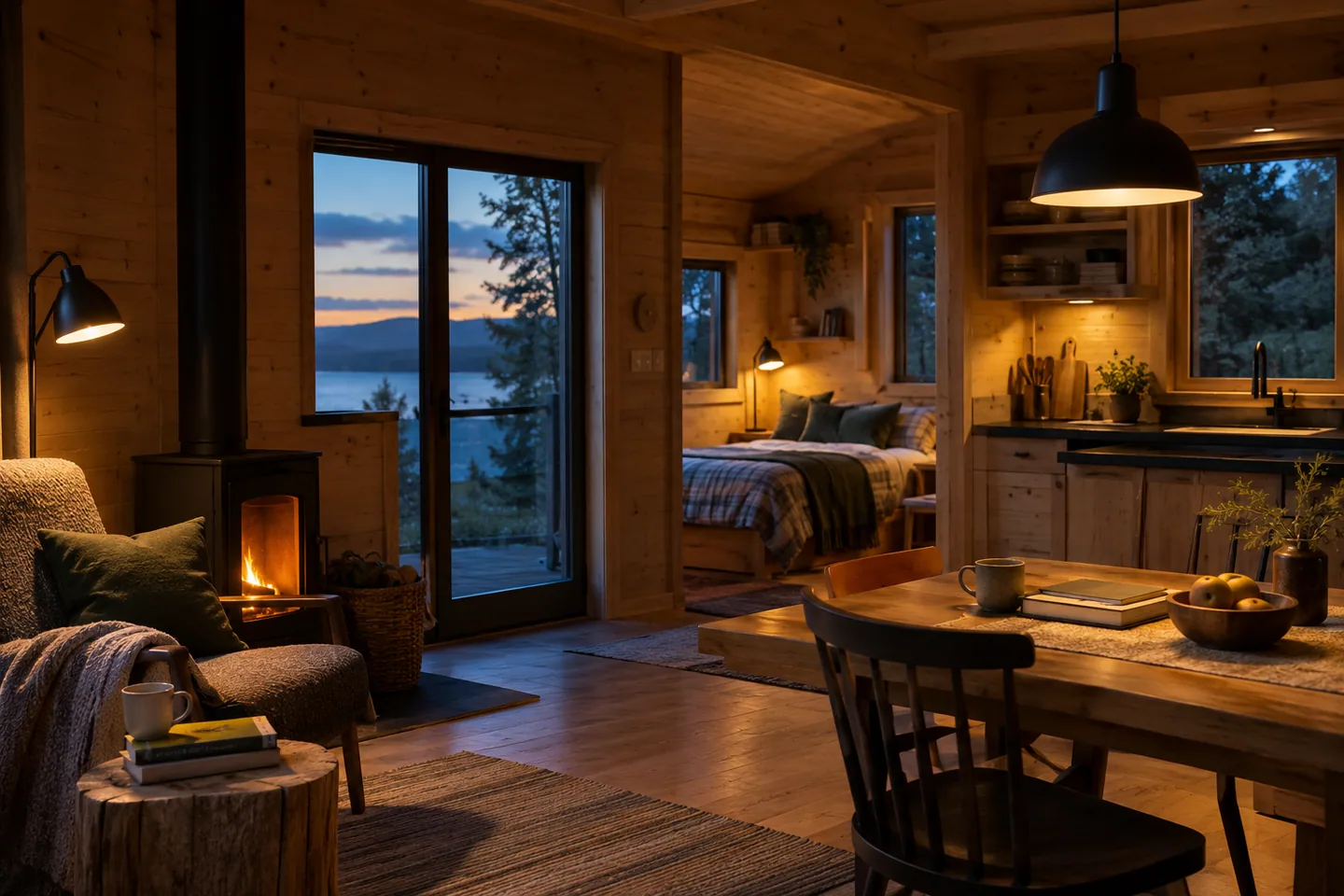
AI-generated cabin concept, used for illustration.
In this guide
Lighting energy is straightforward to estimate when you know the combined electrical power and hours of use. That calculation does not tell you whether the room is well lit, so keep comfort and energy as separate checks.
Work through one evening
Suppose six lights each use 8 watts and operate for 5 hours. The total is 6 × 8 × 5 = 240 watt-hours, or 0.24 kilowatt-hours.
At an invented example tariff of $0.20 per kWh, that energy would cost $0.048 for the evening. This is arithmetic, not a current electricity price or a complete bill; fixed charges and other loads are excluded.
Use the actual fixture specifications and your own tariff. Count different rooms separately if their operating hours differ.
Check the light where it is needed
A low electricity figure is not a successful result if you cannot comfortably read or prepare food. Your Home: lighting explains matching illumination to the activity.
Try the proposed arrangement in an existing cabin before committing to many identical fixtures. Check switches, shadows and the effect of sloped surfaces. Have permanent electrical work performed appropriately for your location.
For off-grid planning, add the calculated energy to the daily load list and note any simultaneous-use requirements. Do not let a modest lighting subtotal distract from other equipment that may dominate demand. The calculation is useful because its assumptions are visible and easy to update when a fixture or routine changes.