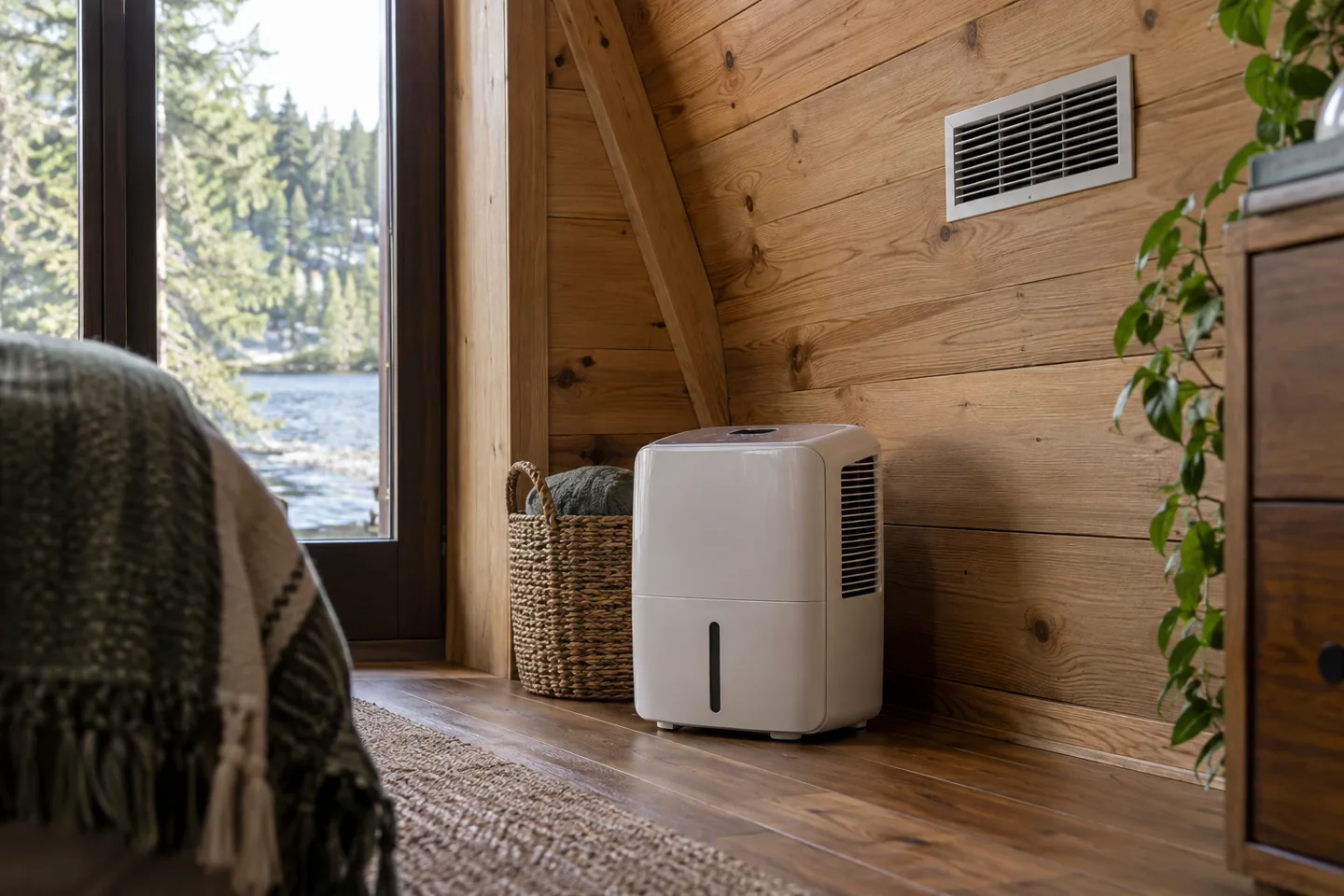
AI-generated cabin concept, used for illustration.
In this guide
A dehumidifier removes moisture from the air it processes. Ventilation exchanges air. They are different functions, so the right cabin response starts with understanding the moisture and air-quality problem.
Find the source and pattern
Record when dampness or high humidity appears, what activities are taking place and whether there are signs of water entry. A plumbing or roof leak needs its cause addressed; an appliance should not be used to hide it.
The US EPA: mold, moisture and your home emphasizes moisture control when addressing mold concerns. Your Home: ventilation and airtightness explains the role of planned ventilation.
Seek appropriate assessment for persistent dampness, suspected hidden damage or extensive mold. This guide does not diagnose a building or prescribe cleanup methods.
Compare complete operating arrangements
If a dehumidifier is proposed, check the actual model's operating conditions, drainage, maintenance and electrical demand. If ventilation work is proposed, ask how the system suits the climate and existing building.
An illustrative distinction: a device with a full collection tank may stop working while the cabin is unattended. That makes the drainage and supervision arrangement part of the decision, not an optional detail.
Keep the operating plan and a way to review results. Record the same conditions before and after the change, noting weather and occupancy. The goal is to control the underlying moisture problem and maintain appropriate air exchange, rather than choosing between two labels as though they were interchangeable products.