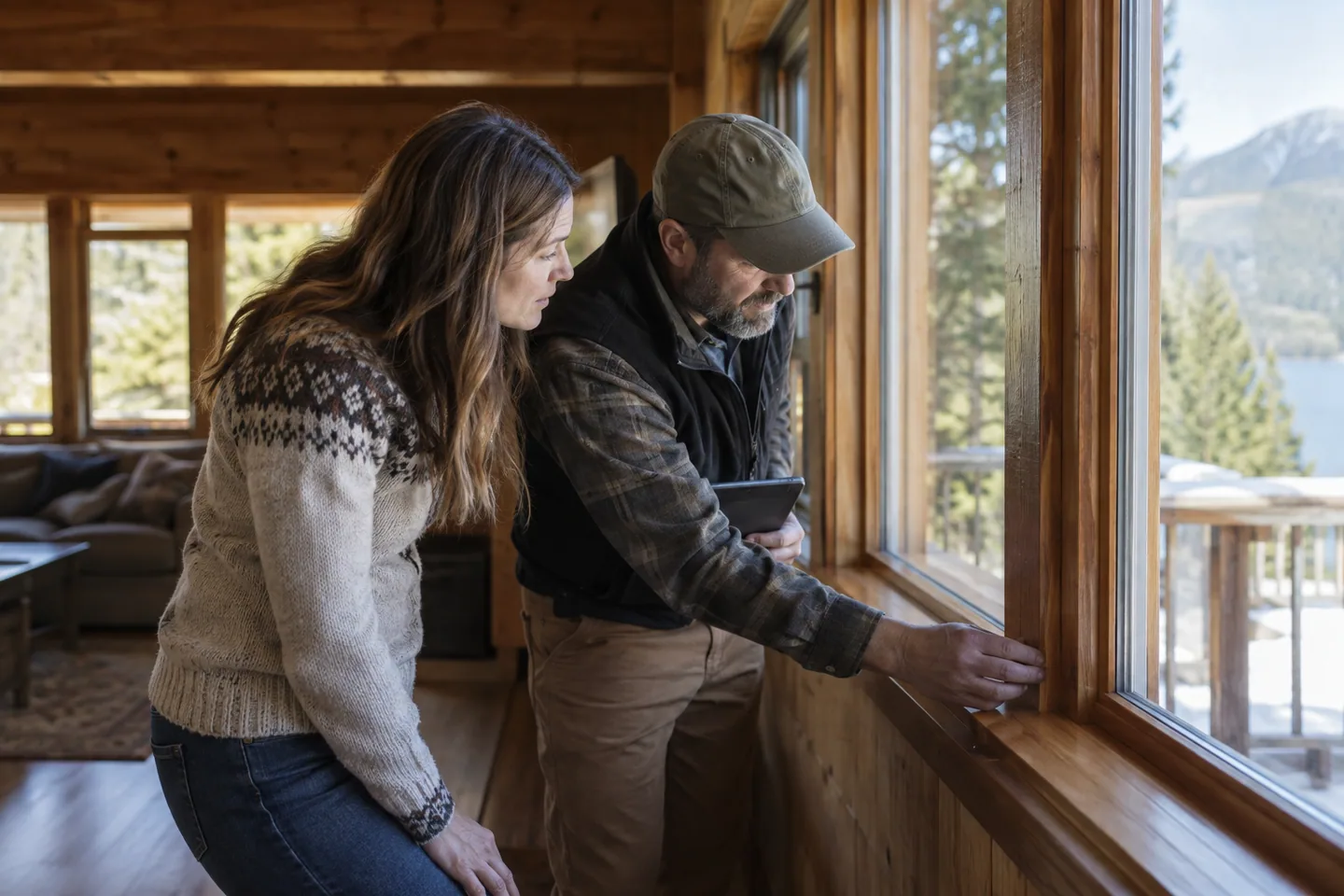
AI-generated cabin concept, used for illustration.
In this guide
Start cabin energy upgrades with an assessment of the building and your intended use. The right order depends on what is wrong, what work is already planned and which changes affect one another.
Sort the evidence before the products
Collect utility records, occupancy patterns and a list of comfort complaints. Add known condition issues such as leaks or damaged materials. Tell the assessor whether the cabin is occupied continuously or warmed only for visits.
The ENERGY STAR: seal and insulate is a useful US starting point for considering the building envelope. A product advertisement cannot establish the priority for your particular cabin.
Compare coordinated packages
Ask how proposed insulation, air sealing, windows and equipment changes interact. Avoid sizing a new system on assumptions that will immediately change through other planned work.
Use a simple decision table: problem addressed, scope, dependencies, estimated cost and unresolved questions. Leave savings estimates unfilled unless the method and assumptions are explained.
An illustrative opportunity is coordinating roof-related improvements with already necessary roof work. That may avoid reopening finished construction later, but the actual cost and design benefit need confirmation.
Set a way to review the result. Compare similar periods and note occupancy and weather differences rather than attributing every lower bill to one upgrade.
The first purchase should follow the evidence. A smaller coordinated program that resolves the main problem can be more useful than a collection of unrelated “efficient” products chosen one promotion at a time.