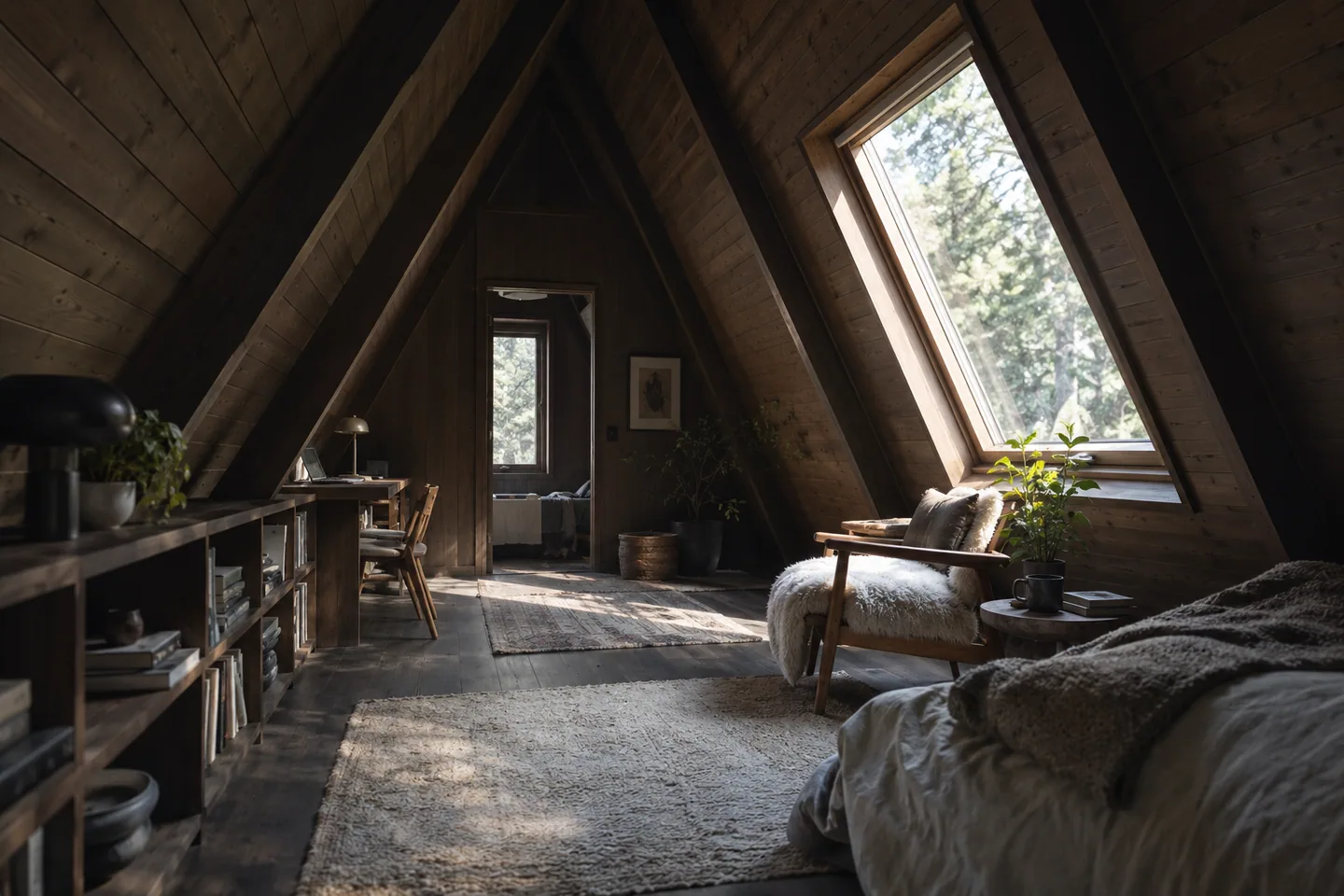
AI-generated cabin concept, used for illustration.
In this guide
A dark-feeling A-frame does not always need more glass. First distinguish a shortage of daylight from poor task lighting or a room arrangement that leaves the important activities in shadow.
Observe the room at different times
Record where the room feels difficult to use in the morning, afternoon and evening. Note the activity: reading, cooking, finding clothes or moving through the space. A dramatic bright window can coexist with a dim working area farther inside.
Try moving a task light or work surface before making a permanent alteration. Your Home: lighting explains matching lighting to the task rather than treating one ceiling fixture as the whole solution.
Compare smaller changes with new openings
Consider the effect of furniture placement, suitable lighter finishes and targeted lighting. Test samples in the actual room; a small paint card under shop lighting is not a reliable picture of a whole sloped ceiling.
If more daylight is needed, ask a designer to compare opening positions with glare, shading, structure and privacy included. A roof window or a different gable arrangement creates other decisions alongside the extra light.
For an illustrative comparison, better light at a kitchen counter may solve the daily problem more directly than enlarging a distant window. Another room may genuinely benefit from a new opening.
Define the activity you want to improve, then compare options by that outcome. More glazing is a design choice, not an automatic cure for every dark corner.