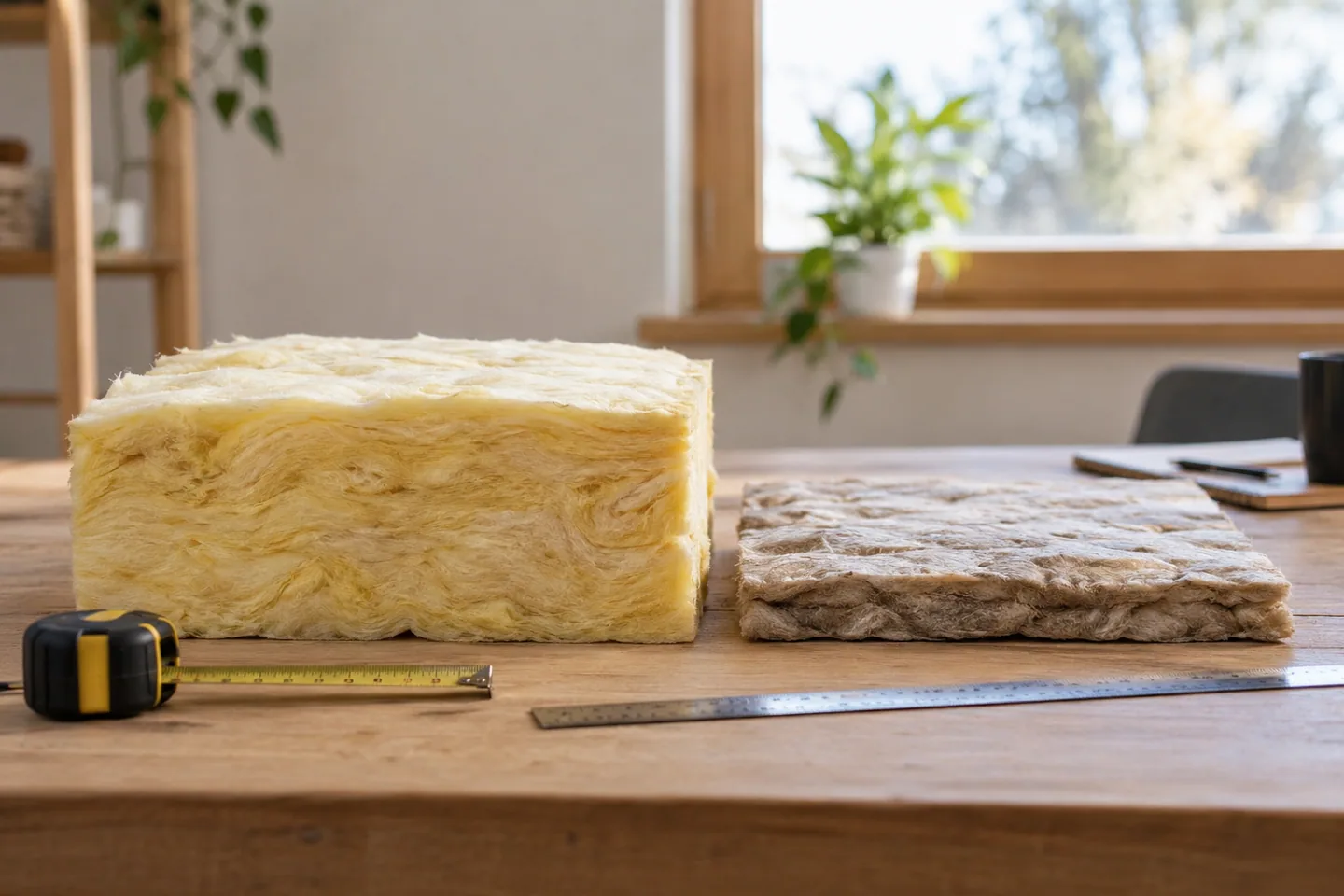
AI-generated cabin concept, used for illustration.
In this guide
An insulation R-value needs its units. US customary and metric thermal-resistance values use different numerical scales, so an imported specification may look much lower without describing weaker insulation.
Read the label before the number
Ask whether the value is in US customary units or square meters-kelvin per watt, often written m²·K/W. Also confirm whether it describes a particular material thickness or the complete assembly.
Your Home: insulation uses metric R-values in its Australian guidance. Do not compare those figures directly with a US package label by looking only at which number is larger.
Keep the original units beside every value in your comparison sheet. If conversion is necessary, have the project team confirm the calculation and the resulting specification before ordering.
Check the rest of the description
Two quotes can use the same unit system and still be difficult to compare if one describes only the insulation material while the other includes the whole construction.
Use four columns: product or assembly, thickness, stated value and unit system. Add the relevant product document rather than copying a number from an unrelated online listing.
An illustrative mistake is replacing an imported product with a local product whose label has a similar-looking number. That is not a valid substitution check.
The practical goal is a clearly specified installed assembly for your location. Unit conversion helps you understand the paperwork; it does not determine code compliance, moisture suitability or the correct material for the design.