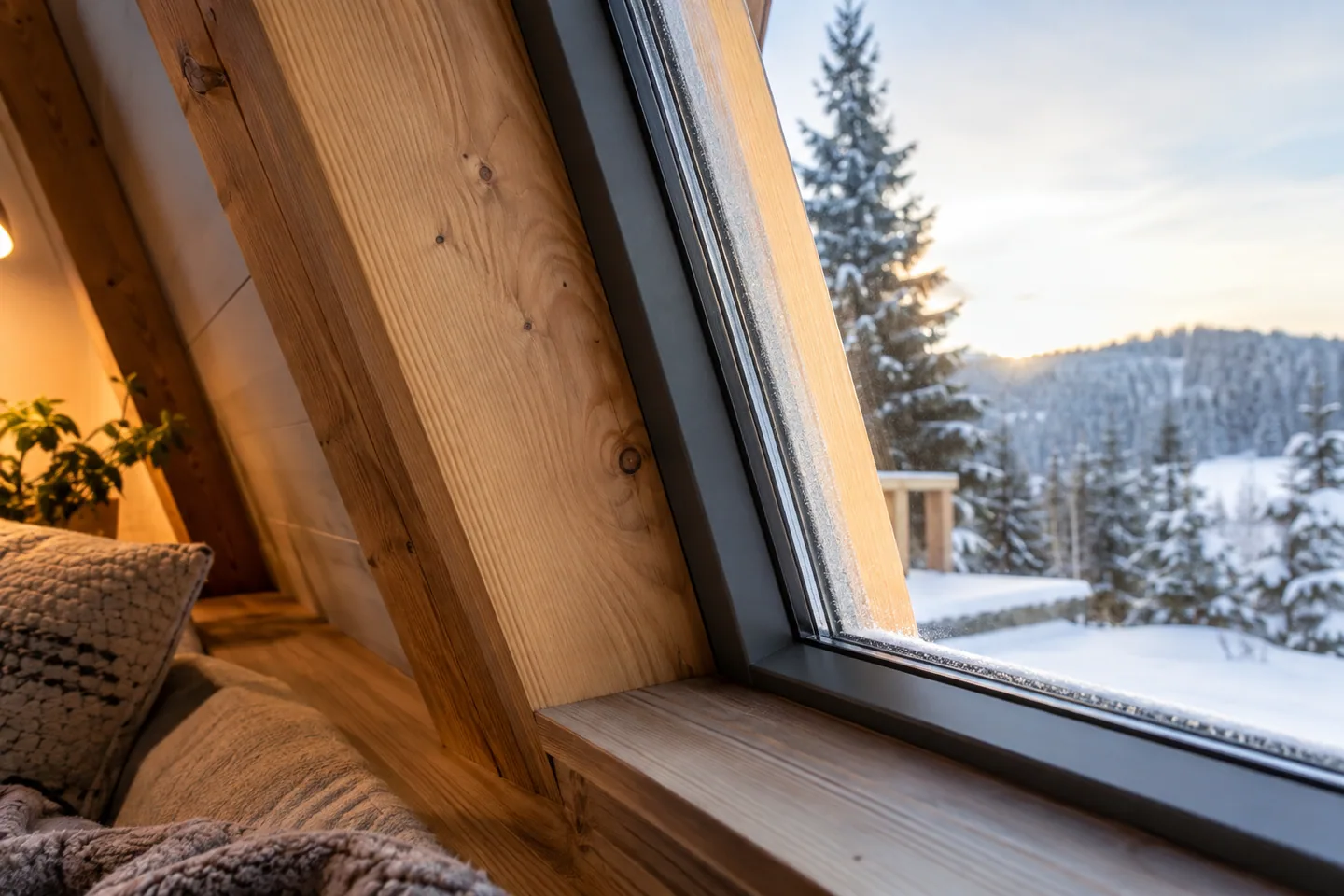
AI-generated cabin concept, used for illustration.
In this guide
A thermal bridge is a part of the construction through which heat moves more readily than through the surrounding insulated area. It can help explain uneven surface temperatures, but a cold-looking patch alone does not establish the cause.
Look at the whole connection
Your Home: condensation discusses thermal bridges in the context of condensation risk. In an A-frame, ask the designer to review relevant framing and junction details rather than judging performance only by the insulation placed between members.
Do not treat a material label as the whole answer. The arrangement of the assembly and its connections matters.
Record symptoms for an assessment
For an existing cabin, note the location, weather and indoor conditions when a surface feels cold or shows moisture. Photograph patterns without opening or disturbing the assembly yourself. If a professional uses diagnostic equipment, ask them to explain what the findings do and do not establish.
An illustrative concern is a repeating pattern along framing lines. That pattern is worth investigating, but it does not automatically prove that adding interior insulation is the appropriate repair.
For new work, ask whether the details maintain the intended thermal-control layer through important junctions. Review any material substitution before installation.
The useful outcome is a specific assessment or coordinated detail. Avoid purchasing a generic “thermal break” product without knowing where it belongs, whether it is suitable for the assembly and how it affects the rest of the design.