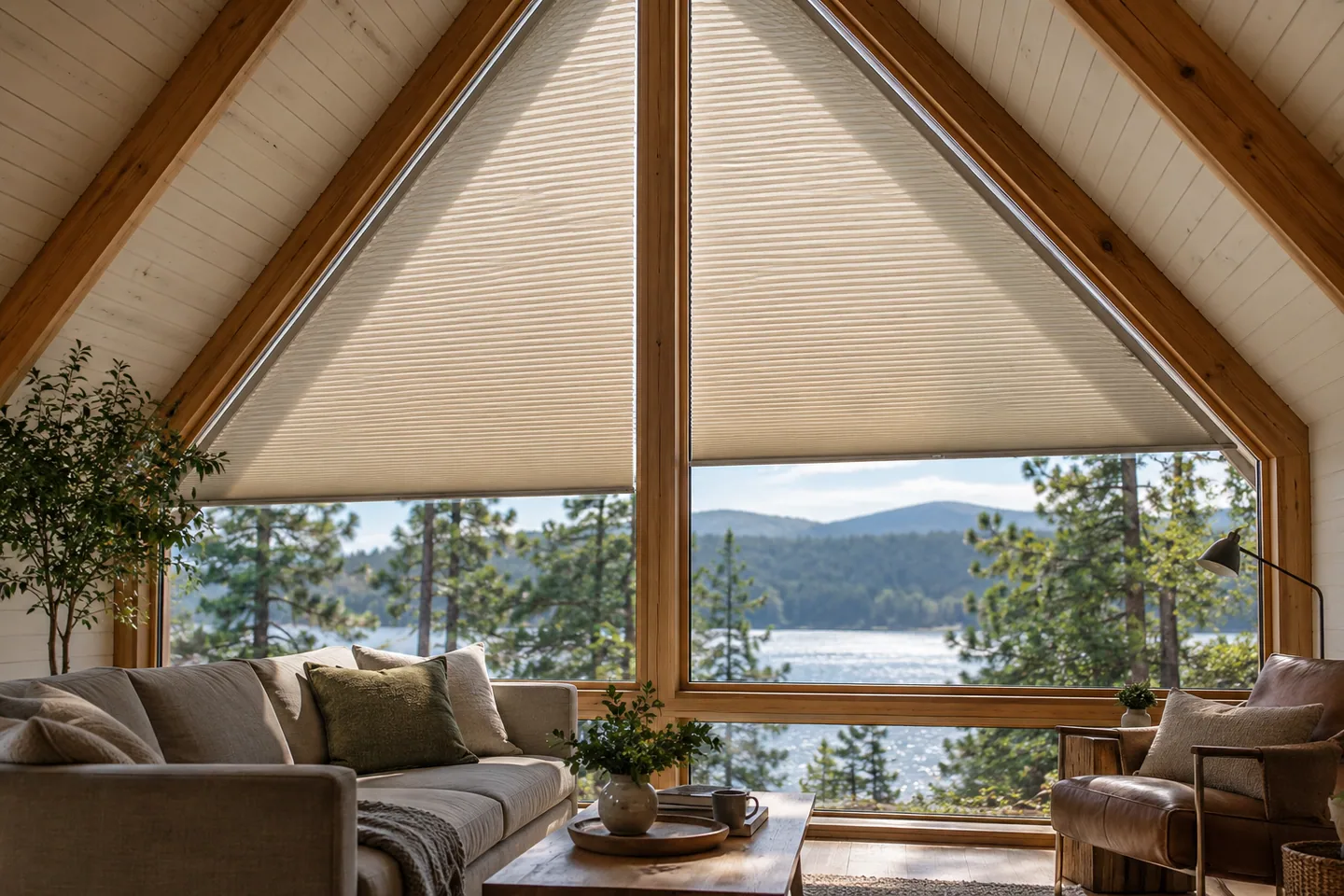
AI-generated cabin concept, used for illustration.
In this guide
Choose A-frame window coverings around the problem you need to solve: privacy, glare or unwanted light at bedtime. A triangular shape may require a different solution from the rectangular window below it.
Separate the window into useful zones
Sketch the glazing and label which sections need privacy at eye level, which cause glare and which can remain uncovered. Check the room after dark as well as during daylight. A daytime view does not establish nighttime privacy.
Ask a supplier what can operate on the actual shape and dimensions. Confirm whether an unusual-shaped covering is fixed or movable, how much light it blocks and how it is removed for service.
Include access in the purchase
High coverings need a realistic control and maintenance plan. If motorized, ask about power, controls and what happens when a component needs replacement. Do not rely on an unsafe ladder arrangement as the normal operating method.
Your Home: shading discusses shading as part of the building's response to sun. Interior privacy coverings and external solar shading are related decisions but do not perform exactly the same job.
For an illustrative compromise, you might cover the lower rectangular panels for privacy while leaving high triangular glass clear. Test whether the remaining light is acceptable in the occupied room before ordering. The most elaborate covering is not automatically the best solution; solving the right part of the window can simplify both use and maintenance.