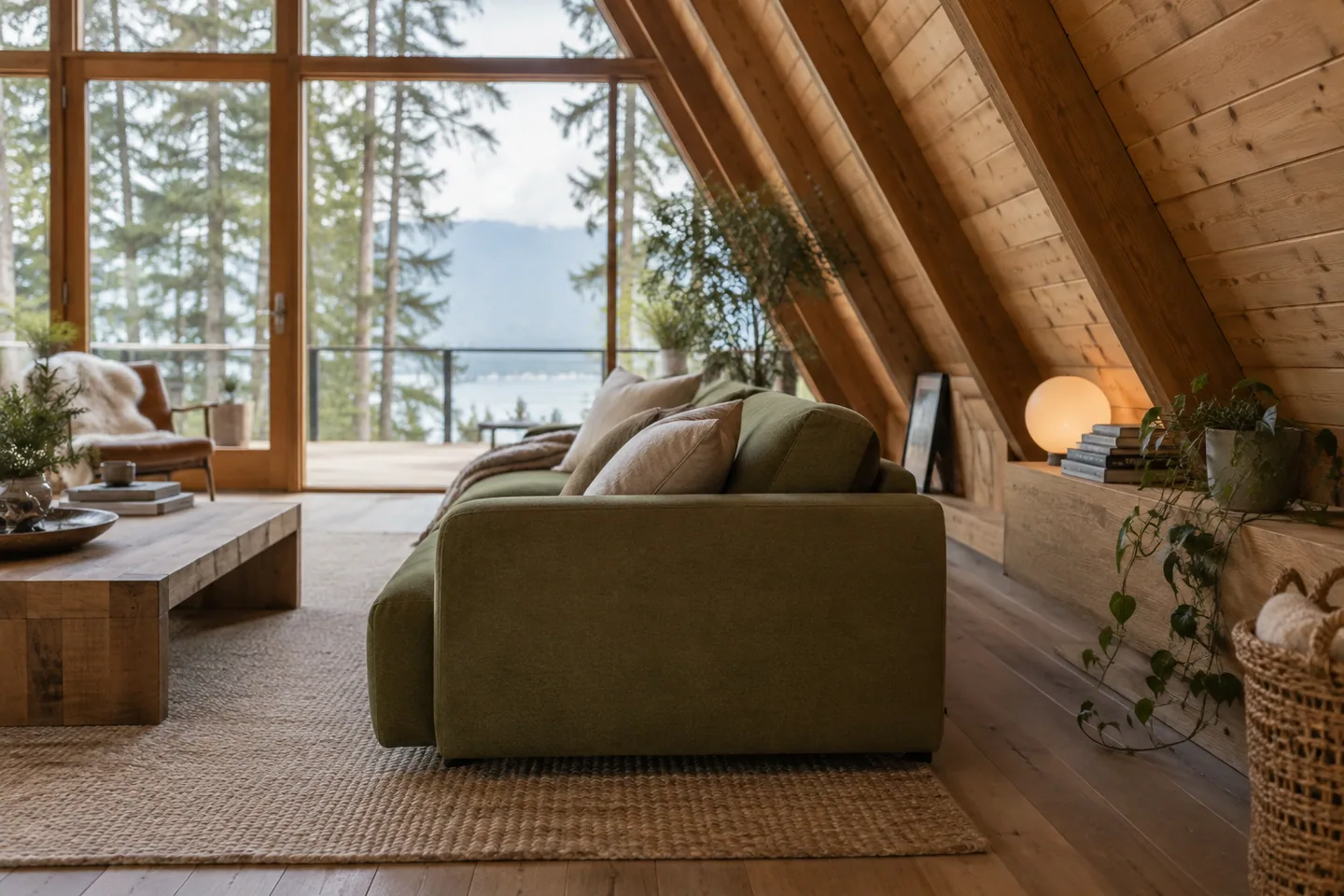
AI-generated cabin concept, used for illustration.
In this guide
A sofa's width does not tell you whether it works against an A-frame wall. Check its back height, depth and the head position of someone sitting normally before pushing it into the low edge.
Use the side profile
Draw the sofa in section beneath the finished roof slope. Include cushions at their normal position. Then mark where someone leans back and rises from the seat.
If the sofa needs to move away from the slope, measure the room again with that gap included. Do not count the hidden space behind it as usable walking space.
A freestanding arrangement may work better than forcing the back toward the wall. Test whether that improves movement and leaves somewhere for lighting without trailing cables across the route.
Give the gap an honest purpose
The space behind a sofa may suit a deliberately designed ledge, but it can also become an awkward dust trap. Keep access for cleaning and any building-service requirements. Avoid covering vents or equipment with furniture.
Your Home: designing a house offers general context for testing how a room will function. The furniture trial is still specific to the people and products involved.
Before purchasing, use the manufacturer's dimensions and tape the outline in the proposed position. Sit on the actual model if possible. A low-back sofa may solve one geometric problem while being uncomfortable for the person who uses it every evening.