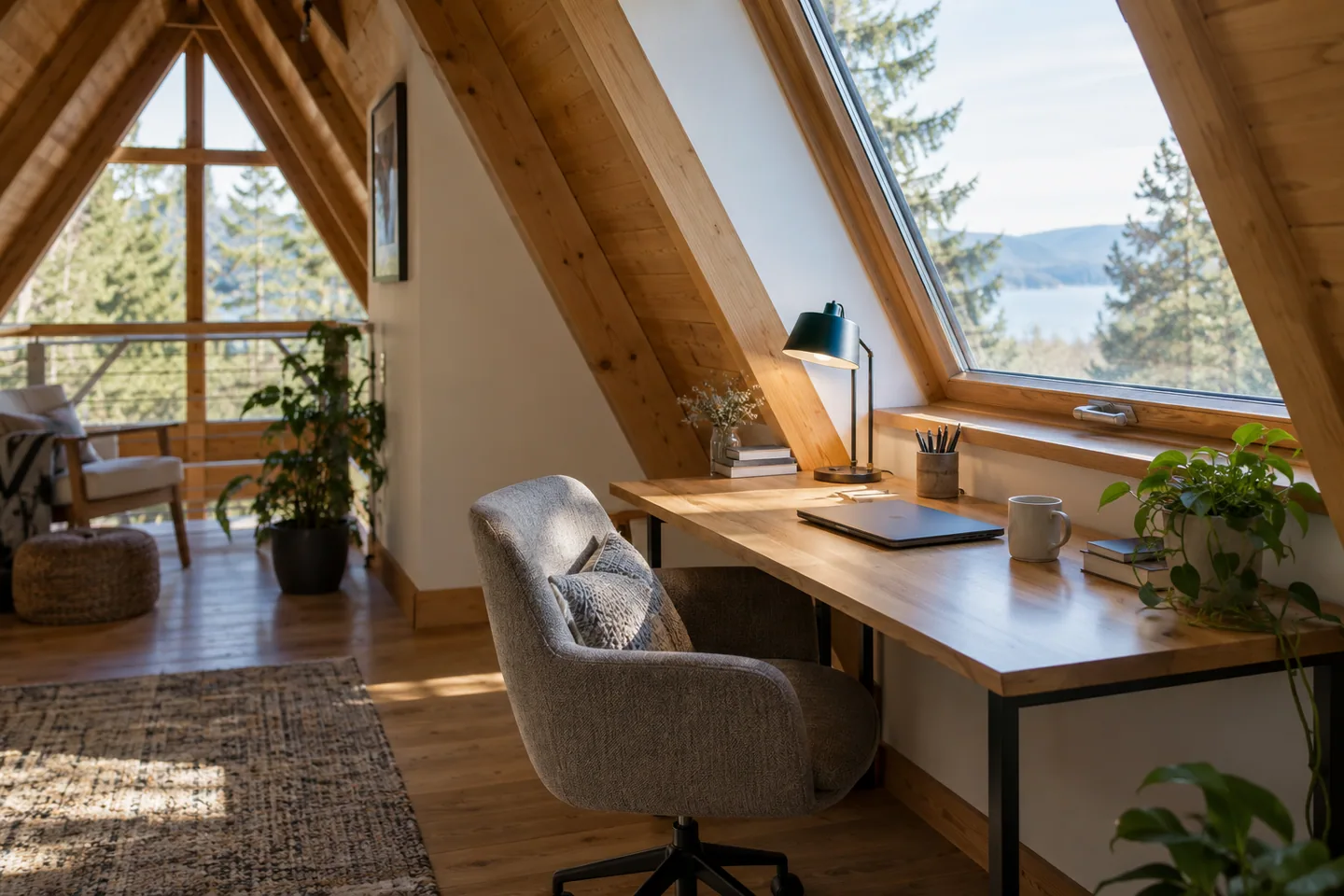
AI-generated cabin concept, used for illustration.
In this guide
A desk fits an A-frame when the seated position, chair movement and work routine fit too. A low roof edge may accommodate the desktop while leaving poor space for the person using it.
Test the occupied position
Draw the desk, chair in use and room to get up. Check the roof section above the user's normal head position. Add the actual monitor, task light and any equipment that needs ventilation or cables.
Daylight is useful, but the screen should remain readable. Test a likely position at different times if the cabin exists. In a design, consider the window relationship and possible shading before fixing the outlet locations.
Your Home: lighting provides general guidance on arranging light for tasks. Product setup and individual comfort still need a real trial.
Give calls and concentration somewhere to happen
Ask what else takes place during working hours. An open loft above the living room may offer a view while sharing every conversation below. If calls are frequent, a door and an appropriate room arrangement may matter more than a larger desktop.
Run an ordinary work sequence: start a call, charge devices, take notes and leave the desk without moving a chair that blocks the main route. Test the internet separately.
Choose the smallest setup that supports the actual work comfortably. A laptop photograph on a narrow ledge does not demonstrate that the spot will work for several hours.