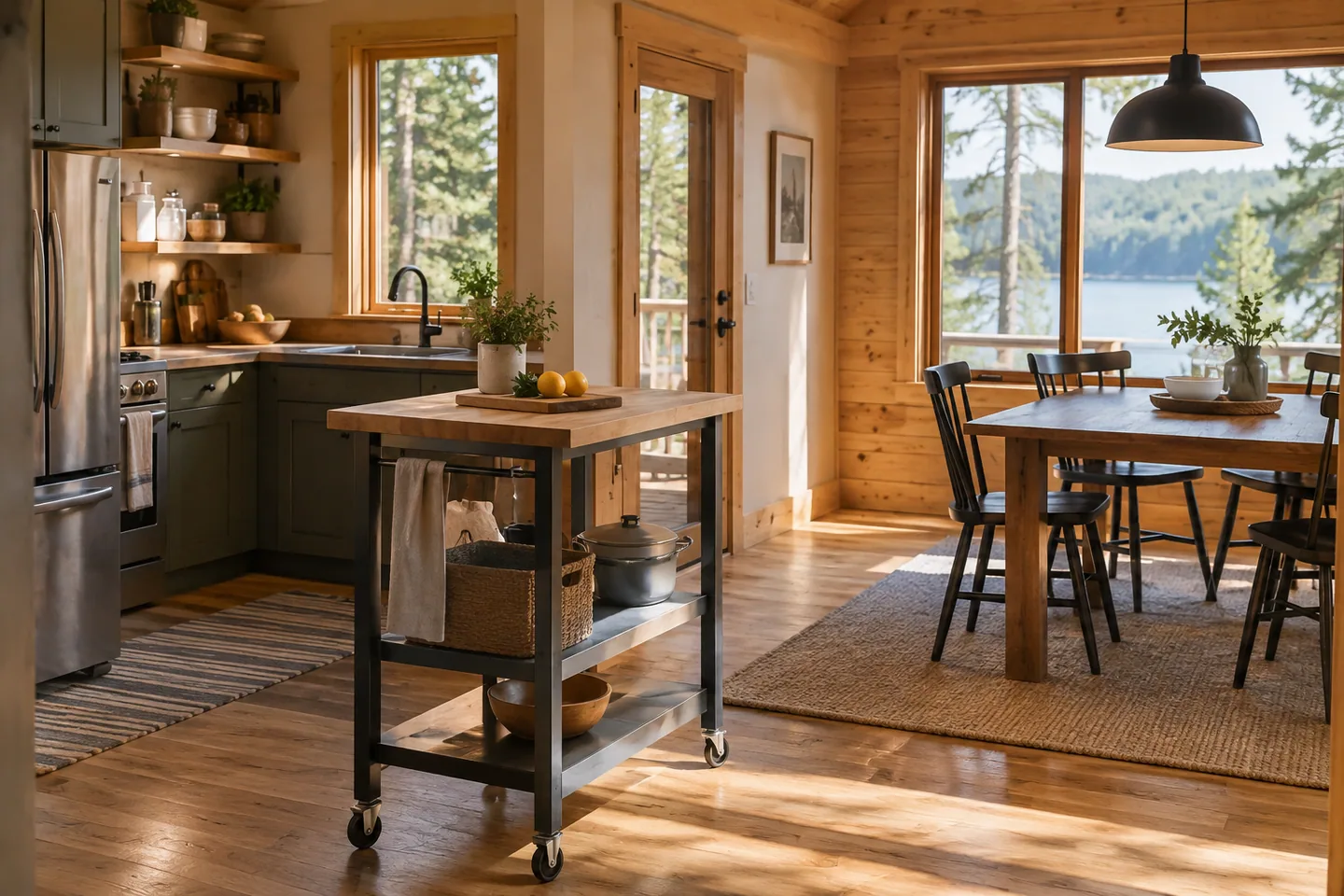
AI-generated cabin concept, used for illustration.
In this guide
A small cabin needs useful preparation and dining space; it does not necessarily need an island. Choose an island only when the room still works around it during ordinary cooking and movement.
Give the island a specific job
Write down what it adds: preparation space, seating, storage or separation from the living area. If its only purpose is to resemble a reference photograph, test alternatives before committing.
| Option | Useful question |
|---|---|
| Fixed island | Can appliances and drawers open while someone passes? |
| Movable worktable | Where does it go when you need the floor clear? |
| Dining table | Can it serve preparation and meals without constant disruption? |
| No central furniture | Does the wall counter already do the needed work? |
Use real dimensions and a full-size taped outline. Include stools while occupied, not tucked completely away.
Test the busiest moment
Imagine one person at the sink, another opening the refrigerator and someone carrying a bag through the cabin. If every action requires moving a stool or asking someone to step aside, the island may cost more space than it earns.
Your Home: designing a house supports planning around use before finalizing the arrangement. Confirm the actual product and installation requirements separately.
A smaller movable surface may be the better first purchase in an existing cabin. Use the room for a while and record what is missing. A fixed island is easier to justify when it solves a repeated problem rather than filling an empty patch on the drawing.